
Quick Answer
Best Seat Cushion for Tailbone Pain helps If you’re experiencing pain every time you sit down, a high-quality memory foam coccyx cushion can make a significant difference. Unlike ordinary seat pads, coccyx cushions are specifically designed to reduce pressure on the tailbone by suspending it over a U-shaped cut-out, allowing your body weight to rest on your sitting bones instead.
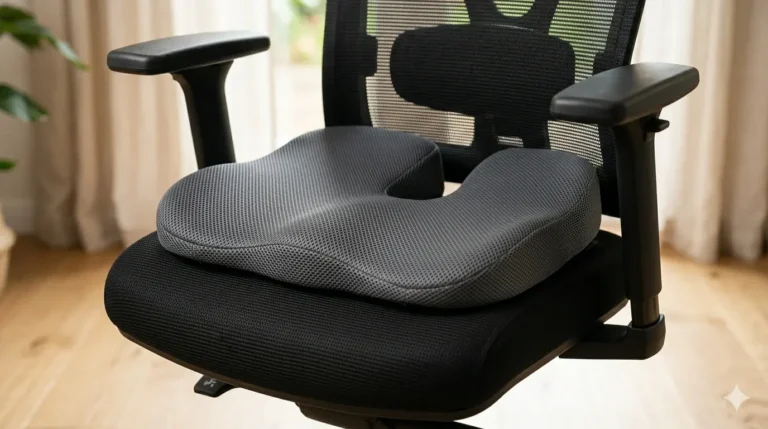
For most office workers, students, drivers, and people who spend six or more hours sitting every day, this simple ergonomic change can improve comfort and reduce pressure on the lower spine. However, choosing the right cushion is essential—many inexpensive products flatten quickly or fail to provide adequate support.
In this guide, you’ll learn how tailbone cushions work, the different types available, what features actually matter, and how to choose the best option for your needs.
What Is Tailbone Pain?
Tailbone pain, medically known as coccydynia, refers to discomfort around the coccyx—the small triangular bone located at the very bottom of your spine.
Although the coccyx is relatively small, it serves as an important attachment point for muscles, tendons, and ligaments that help stabilize your pelvis while sitting.

When excessive pressure is placed on this area, inflammation or irritation can develop, making even simple activities like working at a desk or driving uncomfortable.
Many people experience pain when:
- Sitting for long periods.
- Leaning backward in a chair.
- Standing up after sitting.
- Driving for extended distances.
- Sitting on hard surfaces.
The severity varies from mild soreness to sharp pain that makes prolonged sitting almost impossible.
Why Sitting Makes Tailbone Pain Worse
One of the biggest misconceptions is that the chair itself causes the pain.
In reality, the problem is often how pressure is distributed across your pelvis.
When sitting on a flat surface, much of your body weight naturally shifts toward the lower spine.
If your posture is poor—or if your chair doesn’t provide proper support—the coccyx absorbs more force than it should.
Several factors can increase this pressure:
Poor Posture
Slouching rounds the lower back and rotates the pelvis backward.
This movement pushes additional weight onto the tailbone instead of allowing the sitting bones to support your body naturally.
Long Hours of Sitting
Office workers often remain seated for 6–10 hours every day.
Even if the pressure is relatively small, it becomes repetitive.
Over time this repeated compression can irritate the surrounding tissues.
Hard Chairs
Wooden dining chairs, inexpensive office chairs, and stadium seating usually provide very little pressure relief.
Without cushioning, the coccyx receives nearly the full force of your body weight.
Previous Injury
People who have previously fallen directly onto their tailbone often remain sensitive for months—or even years.
Even after healing, prolonged sitting may still trigger discomfort.
Pregnancy and Childbirth
Hormonal changes loosen pelvic ligaments during pregnancy.
Childbirth can also place significant stress on the coccyx, leaving many women with temporary or persistent tailbone pain.
Can a Seat Cushion Really Help Tailbone Pain?
Yes—but only if you choose the right type.
A common mistake is buying a generic seat pad and expecting it to relieve pressure on the coccyx.
Traditional cushions simply make the chair softer.
A coccyx cushion, on the other hand, changes where your body weight is supported.
Instead of allowing the tailbone to press directly into the chair, the U-shaped cut-out leaves the coccyx suspended in the air while transferring pressure toward the sitting bones and thighs.
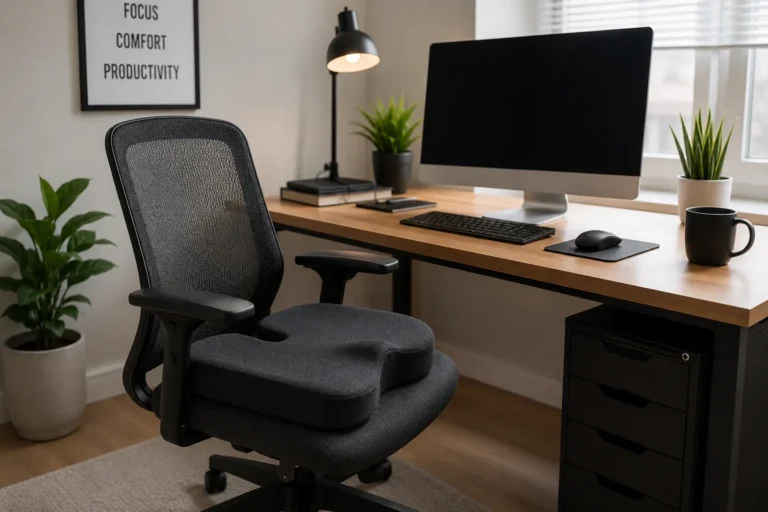
This change in pressure distribution is what makes these cushions effective.
Many users notice improvements such as:
- Reduced discomfort during long meetings.
- Less pain while driving.
- Improved comfort when working from home.
- Better sitting endurance.
- Fewer posture adjustments throughout the day.
It’s important to understand that a cushion helps manage symptoms rather than treating the underlying medical condition.
If your pain is caused by a fracture, infection, or another serious issue, professional medical evaluation is essential.
How Coccyx Cushions Actually Work
To understand why coccyx cushions are different, it helps to understand basic sitting mechanics.
When sitting normally, your weight should primarily rest on two bones called the ischial tuberosities, commonly known as your sitting bones.
Poor chairs often allow your pelvis to rotate backward, shifting pressure toward the tailbone.
A properly designed coccyx cushion restores better weight distribution by:
- Supporting the sitting bones.
- Reducing direct pressure on the coccyx.
- Encouraging a more neutral pelvic position.
- Improving overall sitting comfort.
Think of it like removing pressure from a bruised heel.
Instead of cushioning the painful area directly, you remove pressure from it altogether.
That’s exactly what the U-shaped cut-out is designed to do.
Types of Best Seat Cushion for Tailbone Pain
Not every cushion is designed for coccyx pain.
Here’s how the most common types compare.
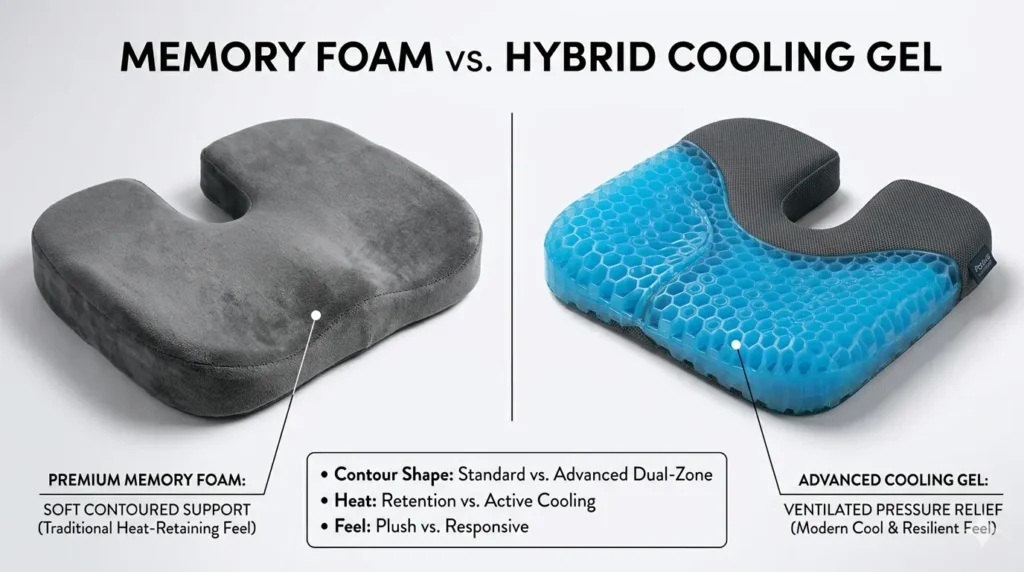
1. Memory Foam Vs Coccyx Cushions ⭐ Best Overall
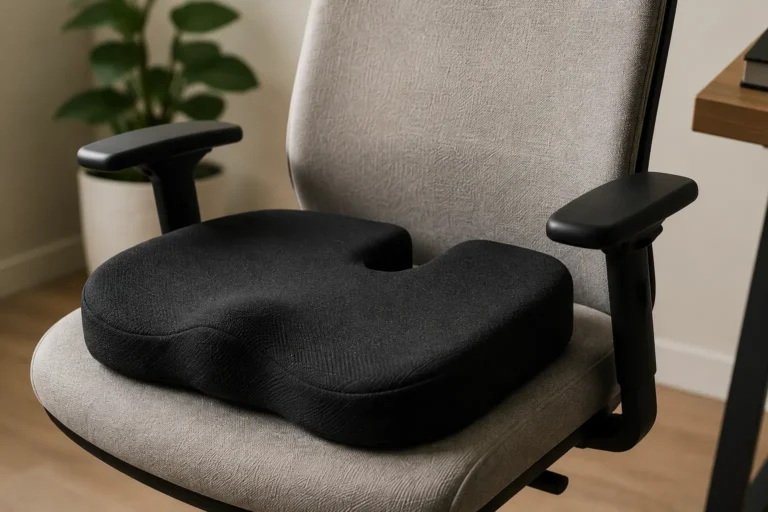
Memory foam remains the most popular material because it conforms to your body shape while maintaining enough firmness to distribute pressure effectively.
Advantages
- Excellent pressure relief.
- Comfortable for extended sitting.
- Supports healthy posture.
- Adapts to different body types.
- Widely available.
Disadvantages
- Can retain heat.
- Lower-quality foam may flatten over time.
Best For
- Office workers
- Students
- Gamers
- Remote workers
- Daily computer use
For most people, this is still the best overall choice.
2. Gel Seat Cushions
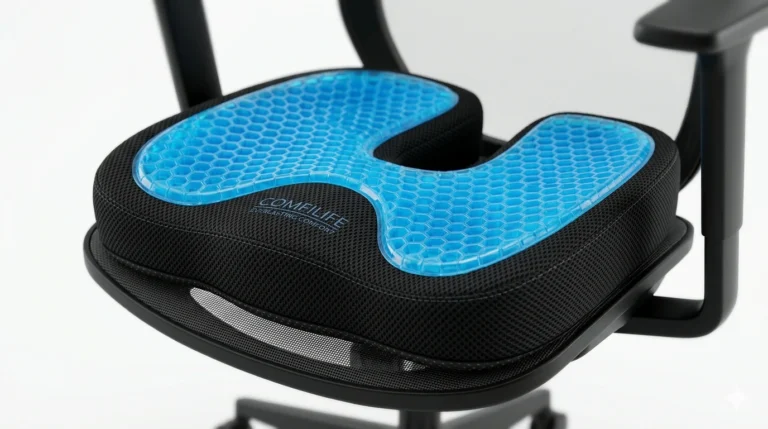
Gel cushions use flexible gel layers to distribute pressure while improving airflow.
Many people prefer them during warmer months because they stay cooler than traditional foam.
Advantages
- Better airflow.
- Cooler seating experience.
- Good durability.
- Easy to clean.
Disadvantages
- Often firmer.
- Doesn’t contour as closely as memory foam.
- Can feel heavy.
Best For
- Drivers
- Warm climates
- Users who dislike soft cushions
3. Donut Cushions
Donut cushions are commonly associated with hemorrhoids, post-surgical recovery, and postpartum care.
Although they also reduce pressure around the center, they aren’t always ideal for office work because they may alter pelvic positioning.
Unless specifically recommended by a healthcare professional, most office workers achieve better long-term comfort using a coccyx cushion instead.
4. Wedge Cushions
Unlike coccyx cushions, wedge cushions elevate the hips slightly higher than the knees.
This encourages a small forward pelvic tilt, helping some people maintain a healthier sitting posture.
While wedge cushions can improve posture, they don’t always relieve direct tailbone pressure as effectively as a dedicated coccyx cushion.
Memory Foam vs Gel: Which One Should You Buy?
This is one of the most common questions buyers ask.
Here’s a simple comparison:
| Feature | Memory Foam | Gel Cushion |
|---|---|---|
| Pressure Relief | ⭐⭐⭐⭐⭐ | ⭐⭐⭐⭐ |
| Cooling | ⭐⭐⭐ | ⭐⭐⭐⭐⭐ |
| Long Sitting Comfort | ⭐⭐⭐⭐⭐ | ⭐⭐⭐⭐ |
| Body Contouring | ⭐⭐⭐⭐⭐ | ⭐⭐⭐ |
| Durability | ⭐⭐⭐⭐ | ⭐⭐⭐⭐ |
| Best For | Office work | Driving & warm climates |
For the majority of readers, a high-density memory foam coccyx cushion offers the best balance of comfort, support, and pressure relief.
Before You Buy: Three Features That Matter Most
Ignore flashy marketing terms.
Focus on these three features instead:
✔ High-Density Foam
Cheap cushions often feel comfortable for a few days before collapsing.
Higher-density foam maintains its shape and continues supporting your body for much longer.
✔ U-Shaped Cut-Out
This is the feature that actually relieves pressure on the coccyx.
Without it, you’re essentially buying a regular seat cushion.
✔ Non-Slip Base
A cushion that slides every few minutes quickly becomes frustrating.
A rubberized base keeps it securely positioned throughout the day.
🥇 Best Overall: High-Density Memory Foam Coccyx Cushion
Ideal For
- Office workers
- Remote workers
- Students
- Gamers
- Anyone sitting 6+ hours daily
Why We Recommend It
A high-density memory foam cushion with a U-shaped cut-out provides the best combination of pressure relief and long-term support.
Unlike soft foam cushions that flatten after a few weeks, high-density memory foam maintains its shape and evenly distributes body weight away from the coccyx.
Pros
✔ Excellent pressure relief
✔ Comfortable for long sitting sessions
✔ Supports better posture
✔ Suitable for most chairs
✔ Long lifespan
Cons
✘ Can retain some heat
✘ Usually costs more than basic foam cushions
🥈 Best for Hot Weather: Gel Seat Cushion
If you live in a warm climate or naturally get hot while sitting, gel cushions are worth considering.
The gel layer improves airflow while still reducing pressure on the tailbone.
Best For
- Drivers
- Warm offices
- Summer use
🥉 Best Premium Option: Hybrid Memory Foam + Gel Cushion
These combine the pressure-relieving benefits of memory foam with the cooling effect of gel.
Although they’re more expensive, they are often the best option for people who spend 8–10 hours sitting every day.
Best Budget Option for best seat cushion for tailbone pain
A medium-density coccyx cushion with a washable cover and non-slip base.
Avoid extremely cheap cushions that advertise “orthopedic” support but don’t include a proper coccyx cut-out.
Best for Driving
Driving creates different pressure points than office work because your hips sit lower and the seat angle changes.
Choose a thinner coccyx cushion that:
- doesn’t raise you too high,
- fits securely on the car seat,
- provides firm support during longer journeys.
How to Choose the Right Cushion for Your Situation
Many buyers only compare prices.
Instead, ask yourself these questions.
How Many Hours Do You Sit?
Less than 3 hours
Almost any quality coccyx cushion will work.
4–6 hours
Choose medium to high-density memory foam.
Durability becomes more important.
8+ hours
Invest in premium foam or hybrid cushions.
The extra support becomes noticeable after several months.
What Type of Chair Do You Use?
Office Chair
Almost every coccyx cushion works well.
Look for:
- non-slip base
- washable cover
- breathable fabric
Gaming Chair
Gaming chairs already have thick padding.
Choose a thinner cushion to avoid raising your sitting height too much.
Dining Chair
Memory foam performs well because dining chairs typically have very little padding.
Car Seat
Choose:
- thinner profile
- firm support
- non-slip material
Does Body Weight Matter?
Absolutely.
This is one area many buying guides completely ignore.
Under 70 kg
Medium-density foam usually provides enough support.
70–100 kg
High-density memory foam is recommended.
It resists flattening and maintains pressure relief.
Over 100 kg
Choose extra-thick, premium-density foam specifically designed for heavier users.
Otherwise the cushion may compress too much and lose effectiveness.
Common Buying Mistakes
Buying the Cheapest Cushion
Cheap cushions often use low-density foam.
Initially they feel soft.
Within weeks they flatten.
Once this happens, pressure returns directly to the tailbone.
Choosing Soft Instead of Supportive
People often think:
“Softer equals more comfortable.”
Actually…
Very soft cushions allow your pelvis to sink too deeply.
This increases pressure rather than reducing it.
Ignoring Chair Ergonomics
Even the best cushion cannot compensate for:
- incorrect chair height
- poor monitor placement
- unsupported feet
- constant slouching
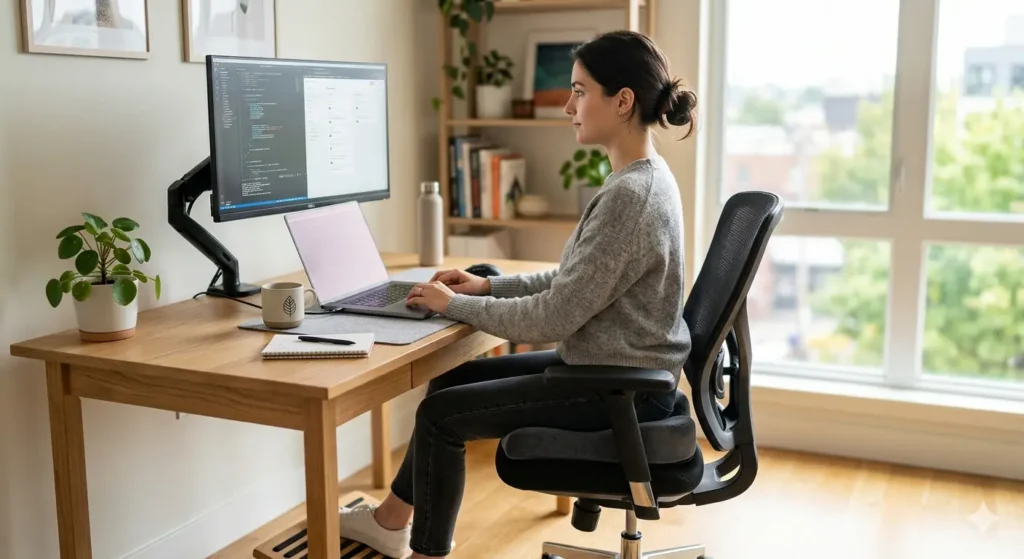
Think of a cushion as one part of an ergonomic setup—not a complete solution.
Sitting for Hours Without Moving
No ergonomic product replaces movement.
A simple two-minute walk every 30–60 minutes helps improve circulation and reduces stiffness throughout the lower back and hips.
When a Seat Cushion Won’t Help
This is something many affiliate websites avoid mentioning.
A seat cushion helps relieve pressure-related discomfort, but it won’t solve every cause of tailbone pain.
Seek medical advice if:
- pain began after a serious fall,
- pain continues for several months,
- numbness develops,
- pain radiates down the legs,
- you experience bowel or bladder changes,
- pain wakes you during the night.
In these situations, the underlying cause may require professional assessment rather than an ergonomic product alone.
Expert Tips for Better Tailbone Relief
Using the right cushion is only part of the solution.
These habits can make a noticeable difference:
Keep Your Feet Flat
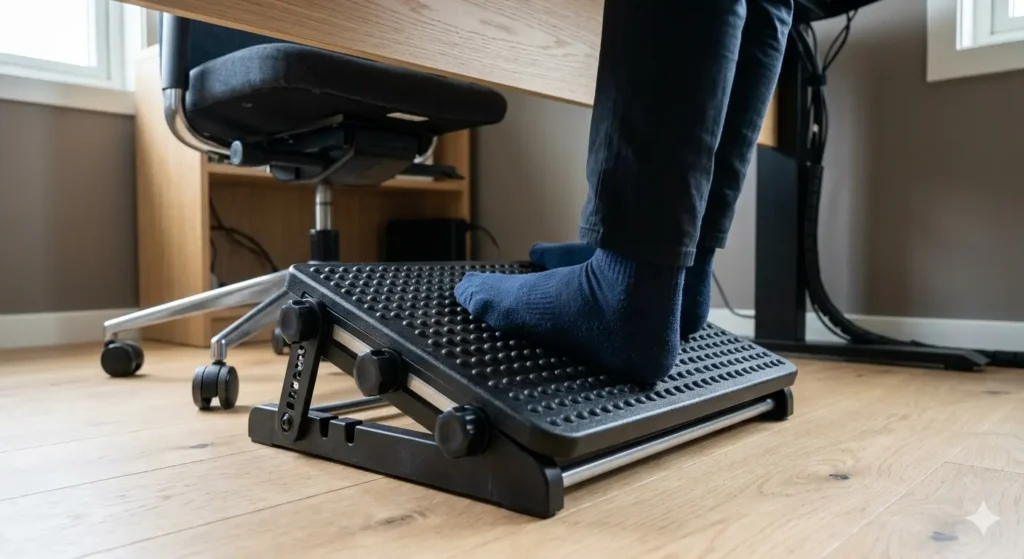
If your feet don’t comfortably reach the floor, consider using a footrest to reduce pressure on the hips and lower spine.
Position Your Monitor Correctly
Looking down at a screen often causes slouching, which changes pelvic position and increases tailbone pressure.
A monitor arm or laptop stand can help maintain a neutral sitting posture.
Sit All the Way Back
Use your chair’s backrest.
Avoid perching on the front edge of the seat, as this places extra stress on your lower back and pelvis.
Change Positions Frequently
Even perfect posture becomes uncomfortable if maintained for hours.
Small posture changes and regular movement breaks are just as important as using an ergonomic cushion.
FAQ-Best Seat Cushion for Tailbone Pain
Do coccyx cushions really work?
Yes. They reduce direct pressure on the tailbone by redistributing body weight toward the sitting bones. Many people experience improved comfort during prolonged sitting.
What is the best seat cushion for tailbone pain?
A high-density memory foam coccyx cushion with a U-shaped cut-out is the best choice for most office workers and people who sit for extended periods.
Is memory foam better than gel?
Memory foam generally provides better pressure relief, while gel cushions stay cooler and feel firmer.
Can I use a coccyx cushion in the car?
Yes. Many coccyx cushions are designed for both office chairs and vehicle seats. Choose a thinner model that doesn’t significantly change your driving position.
How long does a seat cushion last?
A high-quality memory foam cushion typically lasts between two and five years, depending on usage and foam density.
Should I use a donut cushion?
Donut cushions are often recommended after surgery or for specific medical conditions. For everyday office work, a U-shaped coccyx cushion usually provides better posture support.
Can a best seat cushion for tailbone pain fix my posture?
Not by itself. A cushion can encourage healthier sitting mechanics, but proper desk height, monitor placement, and regular movement are equally important.
Are expensive cushions worth it?
Higher-quality cushions generally use denser foam, retain their shape longer, and provide more consistent support. If you sit for many hours each day, investing in a better cushion often pays off over time.
Final Thoughts for best seat cushion for tailbone pain
If you spend hours sitting at a desk, in a car, or at home, choosing the best seat cushion for tailbone pain can significantly improve your daily comfort. A well-designed coccyx cushion reduces direct pressure on the tailbone, encourages healthier weight distribution, and supports better sitting posture during prolonged periods of work or travel.
However, even the best cushion should be viewed as part of a complete ergonomic setup. Combining it with the correct chair height, a supportive footrest, proper monitor positioning, and regular movement breaks will provide the greatest long-term benefit.
Invest in a cushion that matches your body type and daily routine rather than simply choosing the cheapest option. A quality ergonomic cushion can last for years and may make every hour you spend sitting noticeably more comfortable.
Related Comfort Guides
Memory Foam vs Gel Seat Cushions
Compare memory foam and gel seat cushions to find the best option for comfort, cooling, and long sitting support.
Do Footrests Improve Posture?
Find out how ergonomic footrests support better sitting posture, reduce fatigue, and improve overall desk comfort.

Best Seat Cushion for Tailbone Pain
Discover ergonomic seat cushions that help reduce tailbone pressure and improve sitting comfort during daily work or gaming.
Best Seat Cushions for Long Sitting
Improve comfort during long desk sessions with ergonomic seat cushions designed for better support and posture.